
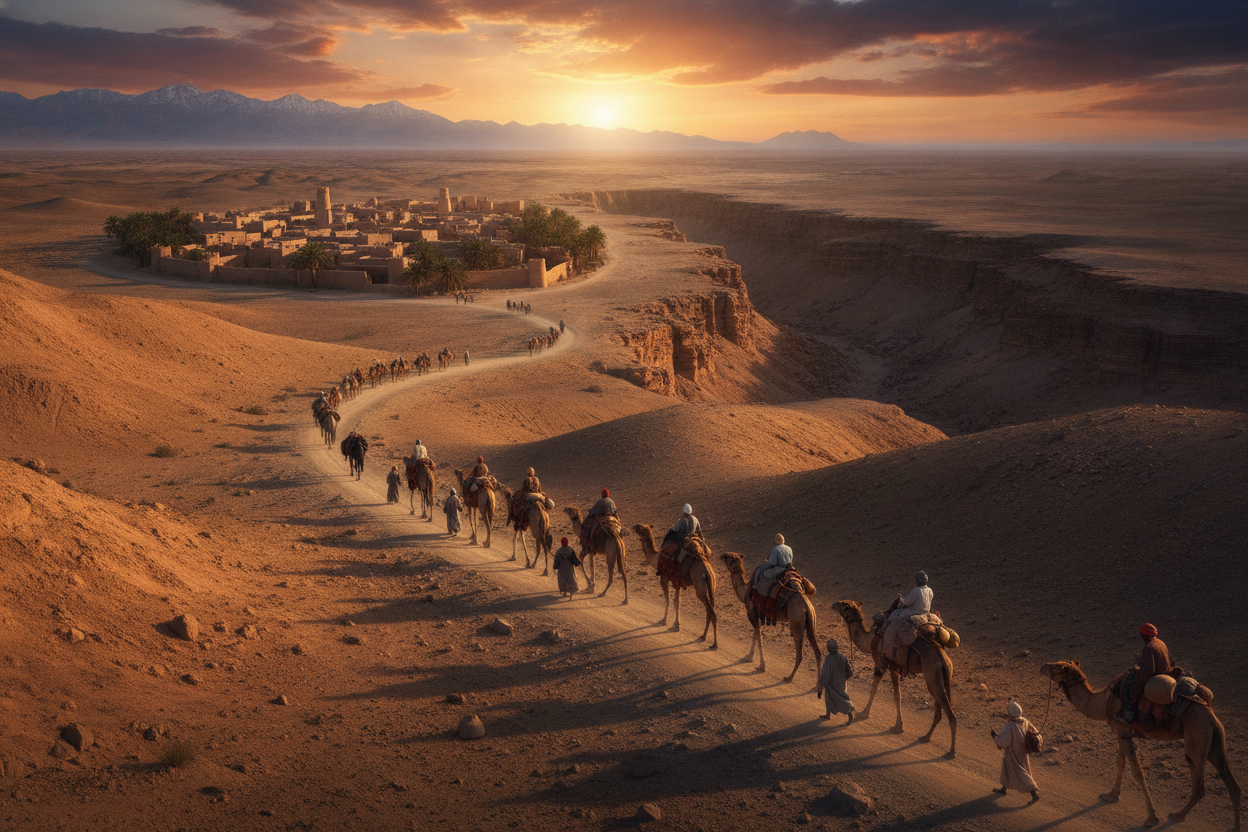
The Silk Road was not a single road but a vast network of trade routes linking Asia, the Middle East, Africa, and Europe. For centuries, merchants moved silk, spices, metals, paper, and other goods across these routes, connecting distant societies in ways that shaped both economies and cultures. The exchange was not only commercial. Ideas, religions, technologies, and artistic styles also traveled along the same paths.
What made the Silk Road so important was its ability to connect regions that might otherwise have remained isolated from one another. Cities along the route became centers of exchange where traders, travelers, and diplomats met. These contact points helped spread inventions like papermaking and influenced the growth of major faith traditions and cultural practices.
Of course, trade routes also carried risk. Travel was long, dangerous, and expensive, and political instability could interrupt commerce. Yet despite those challenges, the Silk Road persisted because the rewards were significant. It helped shape global history by linking people through shared exchange rather than separation.
For history viewers, the Silk Road is a compelling reminder that the past was already interconnected. Long before the modern internet, people were building networks that carried not just products but ideas, making the world feel smaller and more connected than it first appears.
Leave a Reply