
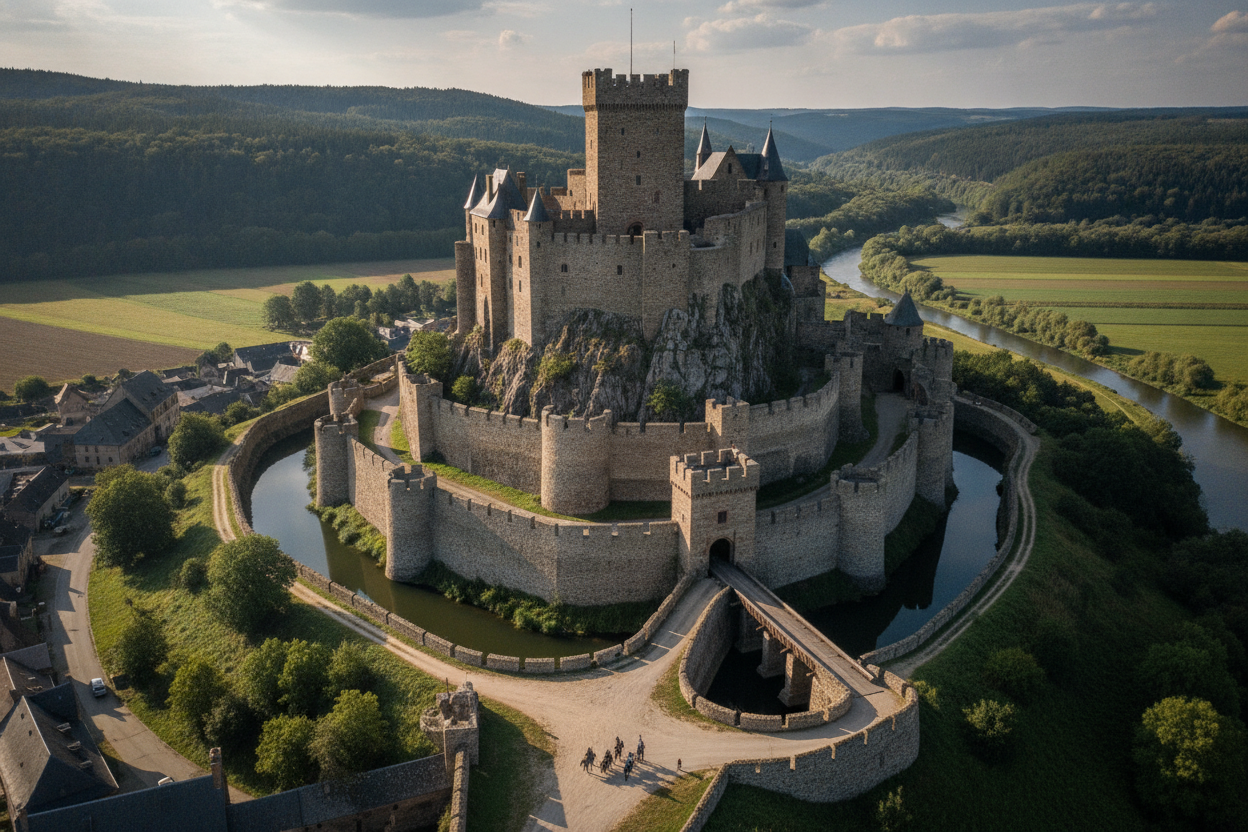
Medieval castles were far more than impressive stone buildings. They were centers of defense, administration, and political authority. Built during a time of conflict and shifting loyalties, castles helped rulers control territory and protect important trade routes, towns, and farmland. Their thick walls, towers, and strategic locations made them powerful symbols of both strength and status.
The design of a castle usually reflected its purpose. A hilltop position gave defenders a better view of approaching enemies, while moats, gatehouses, and arrow slits slowed attacks. Inside, the layout supported daily life as well as warfare. Noble families lived there, soldiers trained there, and local authority was often enforced from within its walls. In this way, castles were active tools of rule rather than decorative landmarks.
Over time, castle design changed as weapons improved. Stronger siege engines and later gunpowder made some older fortifications less effective, leading to new building methods. Even so, castles remained important because they represented control over land and people. Their ruins today still tell stories about class, conflict, and the practical realities of medieval life.
For history viewers, castles offer a vivid window into the past. They combine architecture, warfare, and social hierarchy in one topic, making them especially effective in educational videos that want to bring medieval Europe to life.
Leave a Reply