
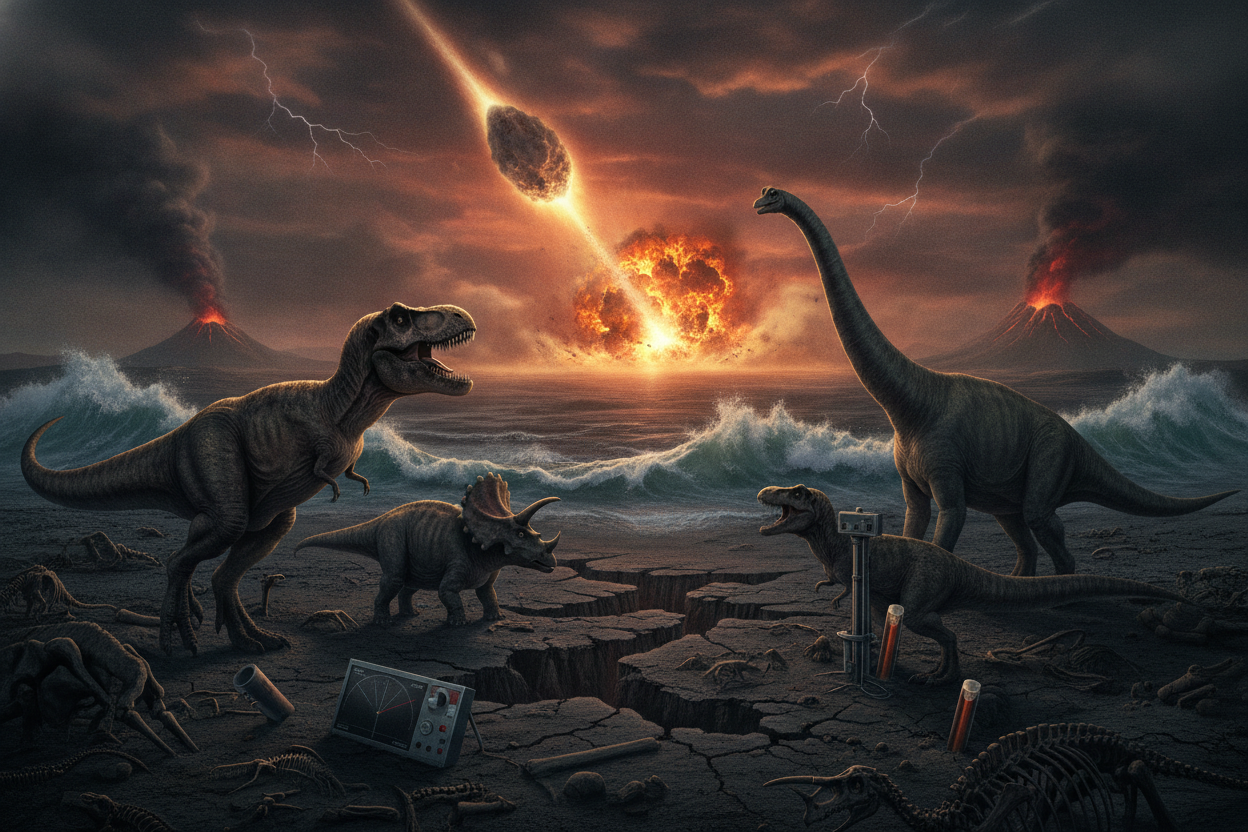
The extinction of the dinosaurs is one of the most famous events in Earth’s history, and for good reason. Around 66 million years ago, a massive asteroid struck what is now the Yucatán Peninsula. The impact triggered fires, earthquakes, and dust clouds that blocked sunlight. As temperatures changed and food chains collapsed, many species could not survive.
Scientists have gathered strong evidence for this event through geology, fossils, and chemical traces in rock layers. One of the most important clues is the thin layer of iridium found in rocks from that time period. Because iridium is rare in Earth’s crust but common in asteroids, it supports the impact theory. Crater evidence and fossil patterns add even more support to the idea that a sudden catastrophe played a major role.
Still, the story is not quite that simple. Some researchers also point to volcanic activity, especially the eruptions that formed the Deccan Traps, as a factor that weakened ecosystems before or after the impact. This makes the extinction a useful case study in how multiple forces can combine to reshape life on Earth.
For science audiences, dinosaur extinction is more than an exciting tale. It is a lesson in evidence, scale, and change. It shows how scientists use clues from rock, climate, and biology to reconstruct a world that vanished long before humans existed.
Leave a Reply